

Filling driveway cracks early is the cheapest way to avoid potholes and repaving. Done right, a repair lasts years. Here is the step-by-step, the crack types, and the mistakes to avoid.
Quick answer: To fill cracks in an asphalt driveway, clean the crack out, dry it completely, fill deep gaps with sand or a backer rod, apply rubberized asphalt crack filler level with the surface, smooth it flush, and let it cure 24 to 48 hours. Work on a dry day between 50 and 85 degrees Fahrenheit, and never fill a wet crack.
Key Takeaways
- Clean and fully dry the crack first, filler will not bond to dirt or moisture.
- Use rubberized asphalt crack filler, not concrete filler, so it stays flexible.
- For cracks wider than half an inch, fill the depth with sand or a backer rod first.
- Repair on a dry day between 50 and 85 degrees, with no rain for 24 to 48 hours.
- Alligator cracking means the base has failed and needs patching, not just filler.
- Wait 30 days after filling before sealcoating, then reseal every 3 to 5 years.
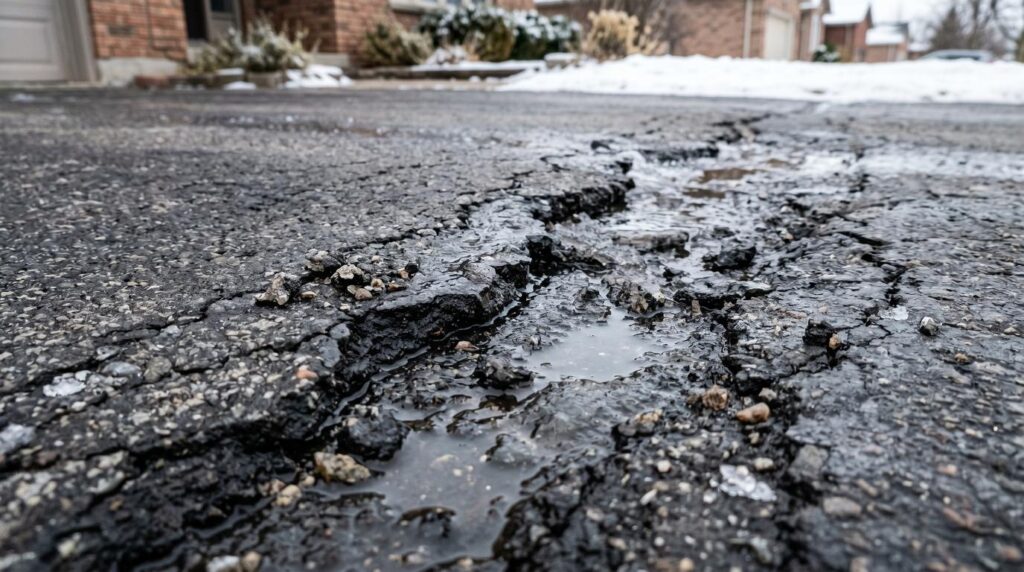
Why Do Cracks Form in Asphalt Driveways?
Water is the biggest cause of asphalt cracks. When rain or snowmelt seeps into the surface and down into the base, cold weather freezes it and it expands, pushing the asphalt apart from the inside. This freeze-thaw cycle repeats every winter and slowly tears the surface apart.
Heavy vehicles add stress the asphalt was not built for, especially near the edges. Poor drainage softens the base and causes the surface to shift and crack. And as any driveway ages, the material loses flexibility and starts breaking down on its own.
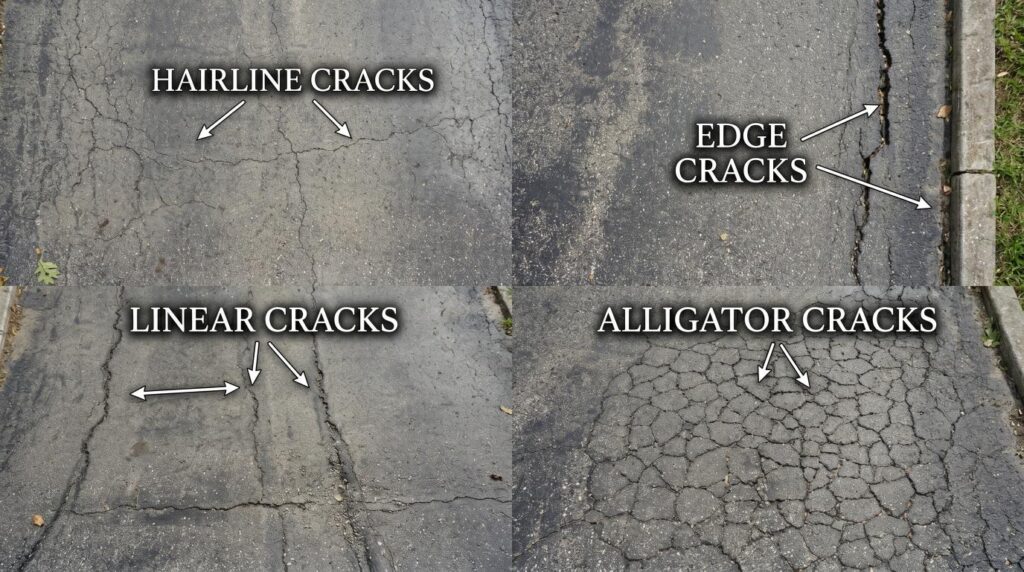
Types of Asphalt Driveway Cracks
The right fix depends on the crack type. Here is how to tell them apart and what each one needs.
| Crack Type | What It Looks Like | How to Fix It |
|---|---|---|
| Hairline | Thin lines under a quarter inch | Seal early with liquid crack filler |
| Linear | Long straight or curved cracks | Rubberized asphalt crack filler |
| Edge | Cracks along the outer edges | Filler plus better edge drainage |
| Alligator | Web of connected cracks | Base has failed, remove and patch |
| Potholes | Surface broken all the way out | Patching material, often professional |
When Is the Best Time to Repair Asphalt Cracks?
The best time is a dry day in late spring or early fall, between 50 and 85 degrees Fahrenheit. That range lets the filler bond and cure properly. Avoid peak summer heat, which makes filler too runny, and winter cold, which stops it from curing. Never apply filler to a wet or damp surface, and make sure no rain is expected for 24 to 48 hours after.
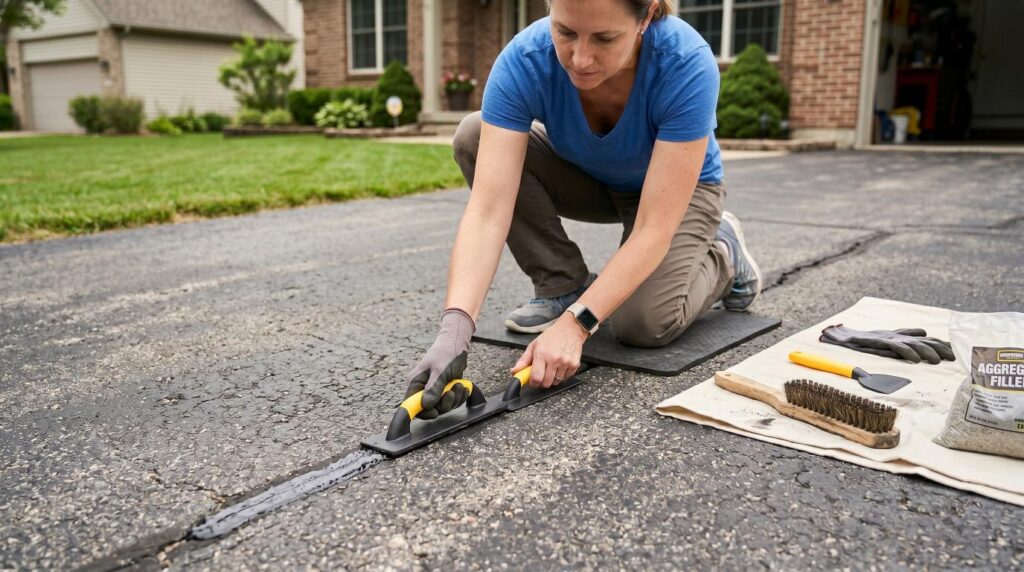
How to Fill Cracks in an Asphalt Driveway, Step by Step
Fill asphalt cracks in five steps: clean, dry, choose the right filler, apply, then smooth and cure.
- Clean the crack thoroughly. Use a wire brush or screwdriver to scrape out loose asphalt, dirt, and old filler, then sweep or blow away the debris. Filler will not bond to a dirty crack.
- Dry the surface completely. Let it air dry or use a heat gun. Even a little moisture inside the crack will make the repair fail early.
- Choose the right filler. For cracks under half an inch, use rubberized liquid crack filler. For wider or deeper cracks, fill the depth first with sand or a foam backer rod.
- Apply the filler. Pour or squeeze it in until it is level with the surface. Work in sections on long cracks, and do not overfill.
- Smooth and let it cure. Level it flush with a trowel or putty knife, then leave it alone for 24 to 48 hours before driving over it.
How to Fix Alligator Cracks in Asphalt
Alligator cracks mean the base has failed, so crack filler alone will not hold. This web of connected cracks usually comes from poor drainage, heavy traffic, or a weak original install. The correct fix is to remove the damaged asphalt down to the base, correct the drainage or structural issue, and patch the area with fresh asphalt. For large or deep areas, professional repair is the cost-effective choice.
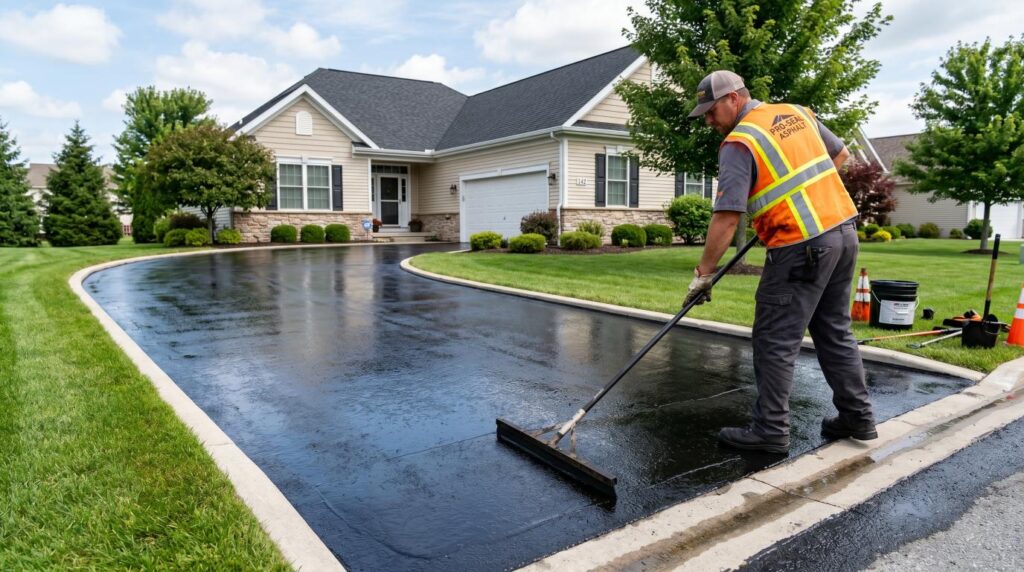
Should You Sealcoat After Crack Repair?
Yes, but wait at least 30 days after filling cracks before sealcoating. A fresh sealcoat blocks water, slows oxidation, and shields against UV, and it blends the repaired areas in. Sealing too early traps moisture and weakens the repair. Once cured, a proper sealcoat can add 5 to 7 years of driveway life.
Common Asphalt Crack Repair Mistakes
Filling wet cracks
The most common mistake. Filler will not bond to a damp crack, it peels, bubbles, or washes out after the first rain. Wait for a fully dry surface.
Using the wrong filler
Concrete filler or the wrong product fails fast on asphalt. Use rubberized asphalt crack filler that stays flexible through temperature changes.
Skipping surface cleaning
Dirt and loose asphalt in the crack stop the filler from bonding. Five extra minutes cleaning makes the repair last years longer.
Repairing in cold weather
Below 50 degrees, filler will not cure right and stays soft and weak. Wait for a mild, dry day.
How Long Does Asphalt Crack Filler Last?
A crack repair done correctly lasts 3 to 5 years. Filler quality, surface prep, and weather during application all affect it, and high-traffic driveways in harsh winters wear faster. Inspect your driveway every spring and fall, refill any cracks that reopen, and reseal every 3 to 5 years. Small, consistent maintenance adds years to the surface.
Frequently Asked Questions
What is the best filler for asphalt driveway cracks?
Rubberized asphalt crack filler is the best choice for most cracks. It stays flexible after curing and handles seasonal temperature changes without cracking again.
Can I repair asphalt cracks myself?
Yes. Most cracks under half an inch wide are easy to fix yourself with basic tools and a bottle of crack filler from a hardware store. Wider cracks or alligator cracking are better left to a professional.
How long does crack filler take to dry?
Most crack fillers dry to the touch within a few hours but need 24 to 48 hours to fully cure before you drive on them. Always check the product label.
Should I seal my driveway after crack repair?
Yes. Sealcoating after crack repair protects the entire surface and helps the repair last much longer. Wait at least 30 days after filling cracks before applying a sealcoat.
What causes asphalt cracks to return?
Cracks come back when the root cause is not fixed. Poor drainage, a weak base layer, or heavy traffic will keep causing new cracks even after repairs. Fixing the source is the only long-term solution.
Cracks, Worn Edges, or Surface Damage?
R. Stanley’s Paving has helped homeowners across Leesport, Reading, and all of Berks County protect their driveways with professional crack repair, patching, and sealcoating. Do not let a small crack turn into a costly replacement. Free estimates.
