

New asphalt can feel hard within hours while it is still soft underneath. Here is the real timeline for walking, driving, and heavy use, and how to protect a fresh driveway so it lasts.
Quick answer: new asphalt is dry enough for light traffic in 48 to 72 hours in good weather, but it takes 6 to 12 months to fully cure. The surface can feel hard within hours while it is still soft underneath, so protect it from rain, heavy vehicles, and turning wheels during the first days and weeks.
Key Takeaways
- Drive passenger cars after 48 to 72 hours in warm, dry weather.
- Full curing takes 6 to 12 months as the asphalt oxidizes and hardens.
- Drying (surface firm) and curing (long-term hardening) are not the same thing.
- Keep heavy vehicles and equipment off for at least two weeks.
- Do not turn your wheels while parked for the first few weeks, it causes power steering tears.
- Sealcoat 30 to 90 days after install, then every 2 to 3 years.
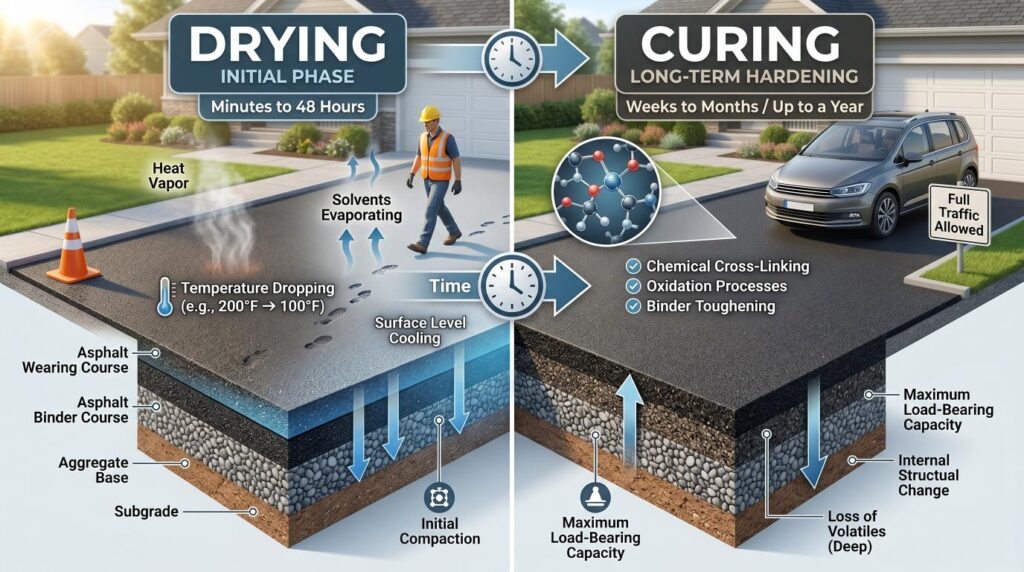
Drying vs Curing: What Is the Difference?
Drying is the surface becoming firm; curing is the long-term hardening underneath. People use the words interchangeably, and mixing them up is a common reason driveways get damaged early.
Drying
The surface becomes firm and cool enough to use and hold weight without marking. It happens in a few hours to a few days, depending on weather.
Curing
The long-term process where asphalt hardens through oxidation and the evaporation of lighter oils. It is measured in weeks to months, up to a full year.
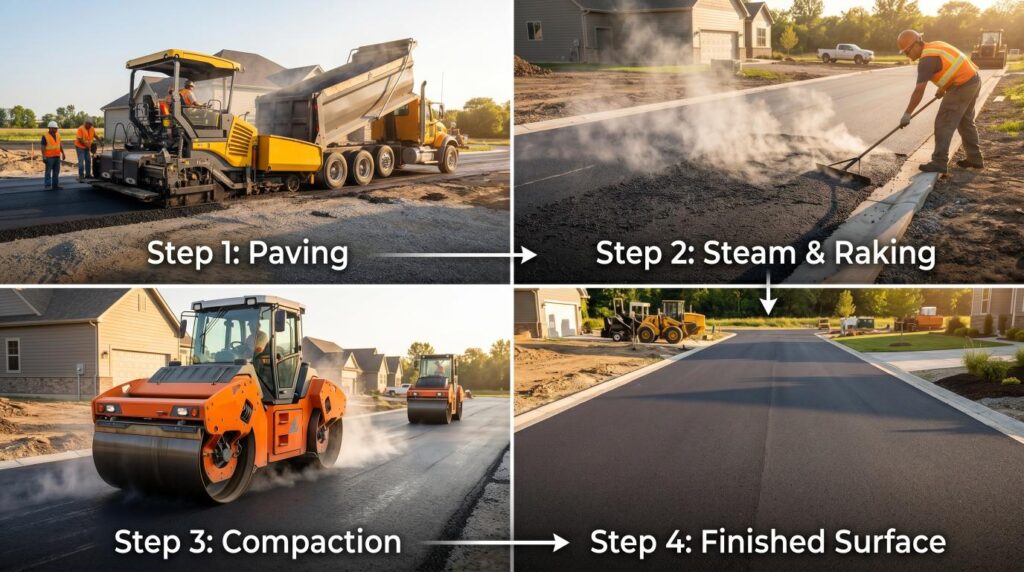
How Asphalt Hardens After Installation
Cooling stage
Asphalt is laid at over 300 degrees, compacted, and hardens as it cools, not by drying in the usual sense.
Initial hardening
The top layer cools faster than the base, so the surface can feel solid while the layers underneath are still soft. Heavy pressure in one spot still dents it.
Long-term curing
The oils in the asphalt oxidize over months, and the surface keeps getting harder and more resistant to wear as it cures.
How Long Before You Can Use New Asphalt?
Wait times depend on how much weight you are putting on the surface. Here is the timeline in good, warm weather.
| Activity | How Long to Wait |
|---|---|
| Walking / foot traffic | 24 hours |
| Passenger cars (residential) | 48 to 72 hours |
| Business / commercial traffic | About 1 week |
| Heavy vehicles and equipment | At least 2 weeks |
| Sealcoating | 30 to 90 days |
| Full cure | 6 to 12 months |
Even after 24 hours, high heels, furniture legs, and kickstands can leave marks because they concentrate weight in a small area. Flat, wide shoes are best during the first week.

How Weather Changes Asphalt Drying Times
Hot summer conditions
Heat speeds up initial cooling, but on very hot afternoons the surface can soften again after traffic. Aim for 70 degrees or above at installation.
Cold weather installation
Cold makes the mix harden too fast, which complicates both installation and curing. It is possible but requires expertise and careful planning.
Rain after installation
Rain in the first hours can wash away fine particles and cause uneven hardening. If rain is in the forecast, postpone the job.
Best season
Late spring through early fall is the sweet spot, warm, drier, with long days for good heat exposure before overnight cooling.
Signs Asphalt Is Still Soft or Vulnerable
Tire marks
If your car leaves tire tracks when you pull out, the asphalt is still too soft and needs more curing time.
Scuffing from turning wheels
Turning the wheel while parked can cause a power steering tear, scraping up the new surface. Drive forward a bit before turning for the first weeks.
Soft spots
If areas feel spongy or give when you press down, they need more time. Soft spots can also mean uneven compaction during installation.
Oil sensitivity
Fresh asphalt is still pliable and oily. Gasoline and motor oil break down the binder far faster than on a fully cured surface.
What Happens If You Use Asphalt Too Soon?
Using asphalt too soon causes permanent tire marks, ruts, and dents, and a much shorter lifespan. The surface may look firm while the layers underneath are still soft and cannot handle the weight. Early stress leads to cracking and breakdown, and a driveway that should last 25 years can start failing in three to four. A few extra days of patience saves thousands in repairs.
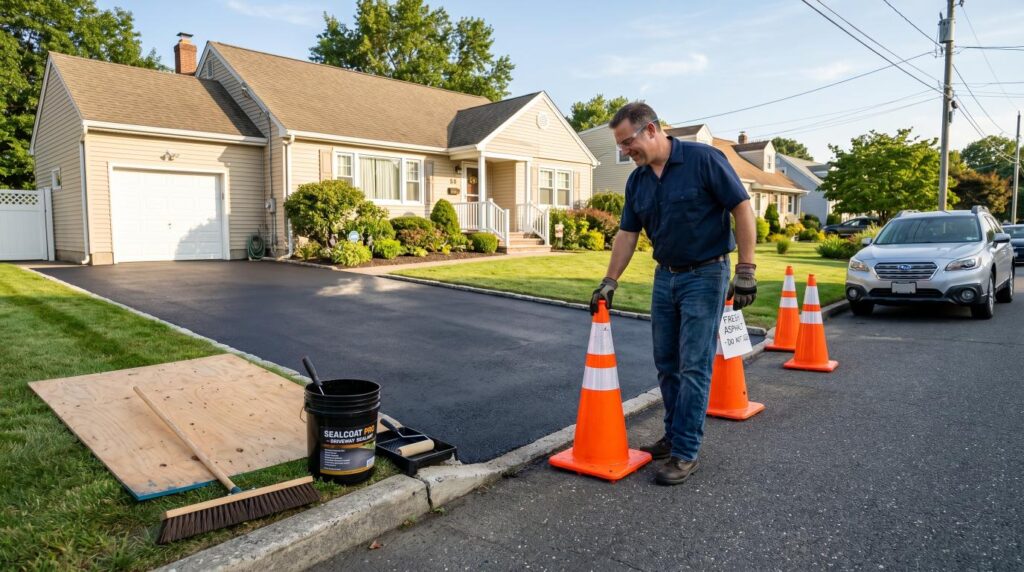
Tips to Help Asphalt Cure Properly
- Avoid heavy parking in one spot. Move your vehicle around the driveway during the first month so you are not pressing the same patch of uncured asphalt.
- Keep sharp objects off the surface. Kickstands, ladder feet, and furniture legs concentrate weight. Set a piece of plywood under them to spread the load.
- Protect the edges. Edges are the thinnest, most fragile part. Avoid driving all the way to the border until curing is complete.
- Clean spills quickly. Blot up gas and oil immediately, and keep cat litter or oil-dry compound nearby for the first several months.
- Improve airflow and sun exposure. Trim overhanging branches. Sun and moving air speed up oxidation and shorten curing time.
When Should You Sealcoat New Asphalt?
Sealcoat a new driveway 30 to 90 days after installation. New asphalt needs time to oxidize and release excess oils first, sealing too early traps moisture and slows curing. Waiting more than a year is also a problem, since unsealed asphalt loses too much oil and dries out. Once in that window, a sealcoat fills surface pores, blocks UV, and repels water. Reapply every two to three years.
How Long Does an Asphalt Driveway Last?
A well-installed asphalt driveway lasts 20 to 30 years with proper care. Lifespan depends on maintenance, traffic, and how quickly you handle small problems. Ignored cracks, poor drainage, heavy use during curing, and skipping sealcoating are what shorten it. For the full breakdown, see our guide on how long an asphalt driveway lasts.
Frequently Asked Questions
How long after asphalt is poured can you drive on it?
Most passenger vehicles can drive on a new asphalt driveway after 48 to 72 hours. In cooler weather, wait a full 3 days to be safe. Heavy trucks and construction equipment should wait at least two weeks.
Is it OK if it rains on fresh asphalt?
Light rain a day or two after installation is generally fine. Rain within the first few hours can be damaging, because it disturbs the surface before it has cooled and set.
Does asphalt dry faster in hot weather?
Hot weather speeds up the initial cooling but can also keep asphalt softer longer during the hottest part of the day. Warm but not extreme temperatures, around 70 to 85 degrees, are ideal for fast, even curing.
Can you walk on asphalt the same day?
Walking on asphalt the same day it is laid is not recommended. Wait at least 24 hours, and even then avoid heels or anything with narrow feet that could leave impressions.
How long does asphalt take to fully cure?
Curing typically takes 6 to 12 months, depending on climate, traffic, and the asphalt mix. You can use the driveway well before then, but full hardness takes time.
Planning a New Driveway or Dealing With Damage?
R. Stanley’s Paving has served Leesport, Reading, and all of Berks County for over 25 years. We install asphalt the right way so it cures properly and lasts for decades, and we handle new driveways, sealcoating, patch work, and repair with our own crew. Free estimates.
