

An asphalt overlay gives you a smooth new surface for far less than full replacement. The catch is the concrete underneath. Here is when it works, when it fails, and how it is done right.
Quick answer: Yes, you can pave asphalt over concrete when the slab is solid and properly prepared. Done right, an overlay lasts 15 to 20 years and costs 30 to 50 percent less than full replacement. On cracked, sinking, or poorly draining concrete, the overlay fails early, because the base is what determines the result.
Key Takeaways
- Asphalt over concrete only works on a solid, stable slab with minor surface wear.
- It costs 30 to 50 percent less than removing and replacing the concrete.
- An overlay lasts 10 to 20 years on a well-prepared base.
- Reflective cracking is the main risk; a tack coat and crack repair reduce it.
- Recommended thickness is 1.5 to 2 inches for driveways, 2 to 3 inches for commercial use.
- If the concrete is sinking, badly cracked, or holds water, replace it instead of overlaying.
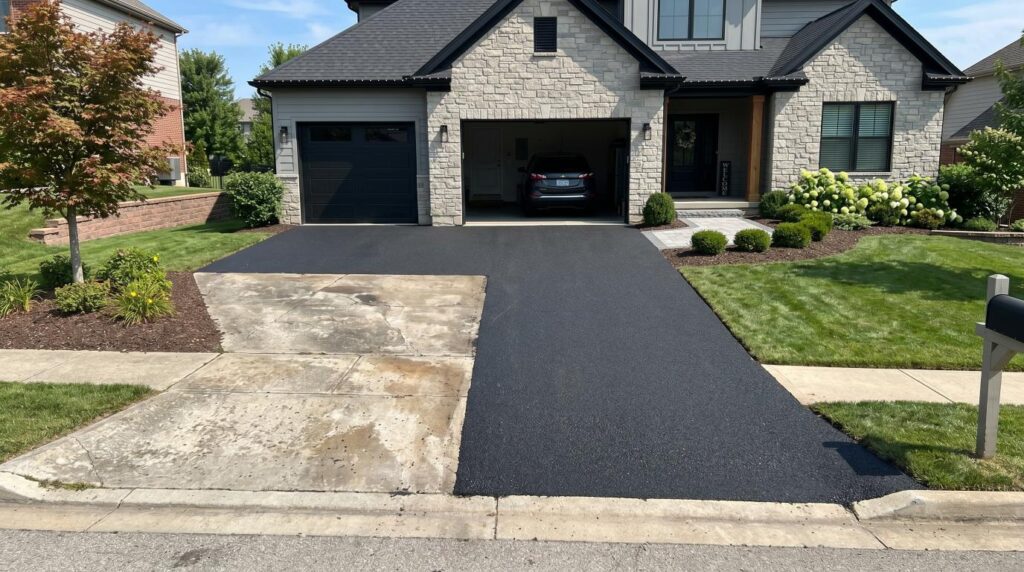
What Does It Mean to Put Asphalt Over Concrete?
An asphalt overlay adds a new layer of asphalt on top of existing concrete without removing it. The concrete stays in place and acts as the base, and the asphalt is bonded to it with a tack coat to create the new driving surface.
This is different from full removal and replacement, where a crew breaks up and hauls away the old slab, prepares the ground, and paves an entirely new surface. That process is more thorough but far more expensive and disruptive.
Is It a Good Idea to Put Asphalt Over Concrete?
It is a good idea only when the existing concrete is solid and stable. If the slab is mostly intact with minor surface wear and no major cracking or sinking, an overlay saves money and time while giving you a fresh, smooth surface. If the concrete is cracked badly, shifting, or has drainage issues, the overlay will fail early, because asphalt cannot fix what is broken underneath.
Asphalt Overlay vs Full Replacement
An overlay is cheaper and faster; a full replacement lasts longer and fixes a failed base. Here is how they compare.
| Factor | Asphalt Overlay | Full Replacement |
|---|---|---|
| Cost | 30 to 50 percent less | Highest (demolition and disposal) |
| Timeline | Often 1 day | Several days or more |
| Lifespan | 10 to 20 years on a solid base | 20 to 30-plus years |
| Best for | Sound concrete with surface wear | Cracked, sinking, or failed concrete |
| Disruption | Low | High |
Benefits of Installing Asphalt Over Concrete
Lower cost than full removal
Skipping demolition, hauling, and disposal saves 30 to 50 percent in most cases. On a standard driveway that can be several thousand dollars.
Faster installation
A full replacement takes several days. An overlay on prepared concrete is often done in a single day, ready to drive on in 24 to 48 hours.
Improved appearance
Old concrete gets stained and rough. Asphalt covers all of it with a dark, smooth, consistent finish.
Added surface protection
The asphalt layer shields the old slab from weather and freeze-thaw cycles, which can extend the life of the concrete underneath.
Problems and Risks of Asphalt Over Concrete
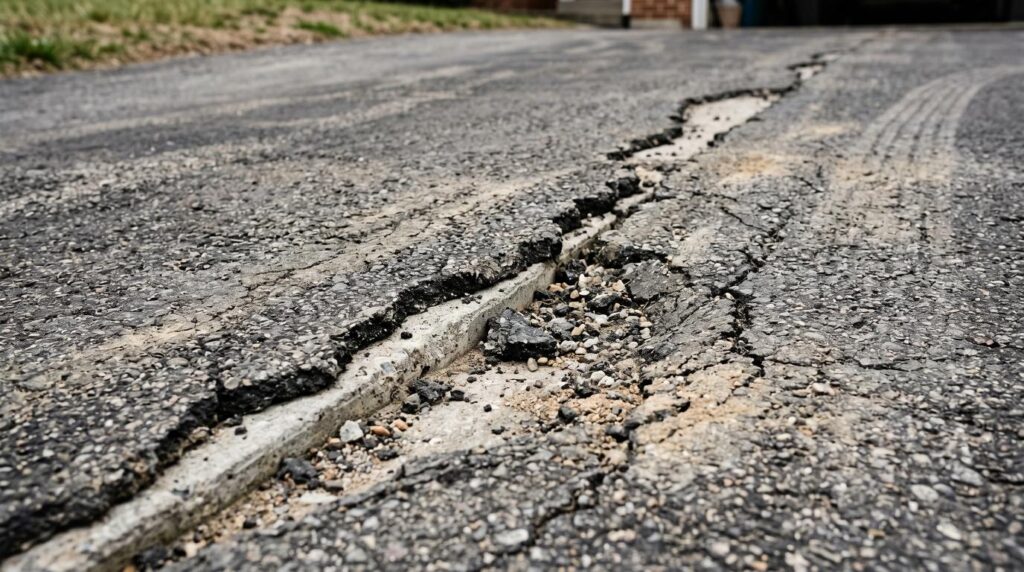
Reflective cracking
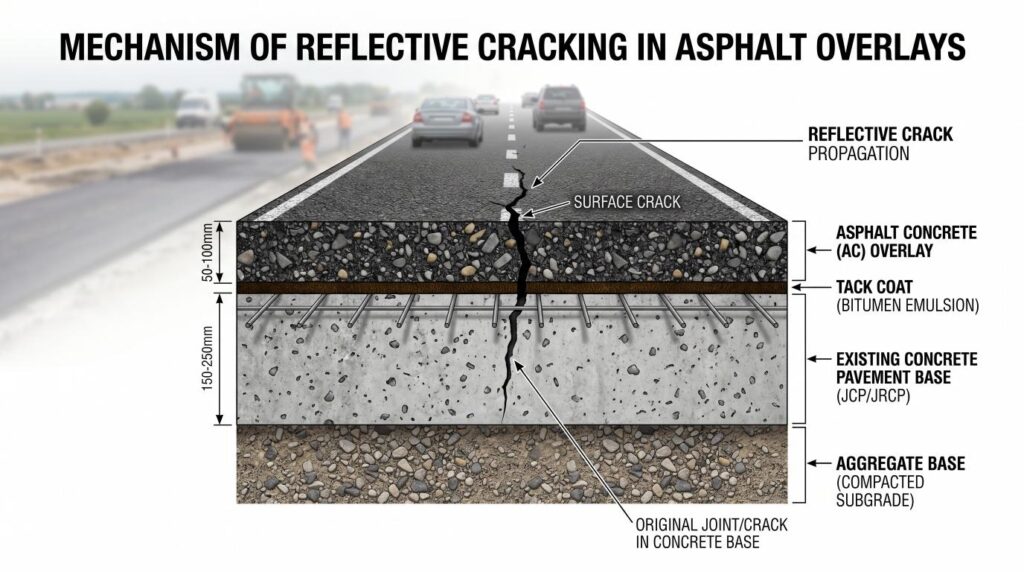
The most common issue. Concrete expands and contracts, and existing cracks transfer up through the asphalt over time, usually within three to seven years on an older base.
Poor bonding
If the concrete is dirty, oily, or not primed with a tack coat, the asphalt will not grip. Sections can separate and crumble, especially at edges.
Drainage problems
Adding at least 1.5 inches of height can redirect water flow and clash with garage thresholds, sidewalks, and curbs if drainage is not planned for.
Shorter lifespan on a weak base
Asphalt is only as good as what it sits on. A compromised slab will push its problems up through the new surface within a year or two.
Key Factors to Check First
Check that the slab is strong, level, well draining, and free of major damage before overlaying. Here is what a contractor looks at.
Condition of the concrete
Hairline cracks are manageable. Anything wider than a quarter inch, crumbling edges, or soft spots needs repair first.
Cracks and joints
Every expansion joint is a potential line for reflective cracking. A fabric interlayer may make sense depending on how many there are.
Drainage and water flow
Confirm that adding height will not redirect water into a problem area. If it already pools, fix that before paving.
Stability and movement
If raised or sunken areas move or sound hollow, the slab is no longer supported from below and will destroy an overlay quickly.
Traffic load
A two-car driveway is very different from a lot with delivery trucks. Heavier loads need more thickness and a stronger base.
How Asphalt Is Installed Over Concrete
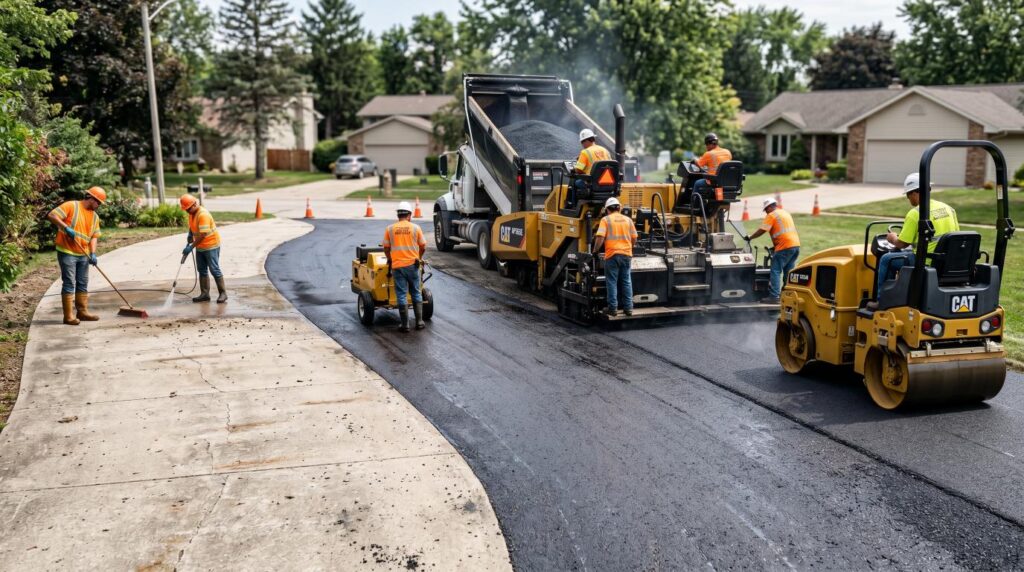
Asphalt is installed over concrete in five steps: inspect, clean, repair, tack coat, then lay and compact.
- Inspect the concrete. Walk the whole surface for sinking spots, loose areas, and drainage problems to decide if it is ready.
- Clean and prepare. Power wash and sweep to remove all dirt, oil, and debris so the asphalt can bond.
- Repair cracks and damage. Fill every crack and cut out and patch larger damaged sections.
- Apply the tack coat. Spray an even layer of asphalt emulsion to glue the new asphalt to the concrete. Uneven application is a top reason overlays fail.
- Lay, compact, and cure. Spread hot mix asphalt, compact it with a heavy roller, and let it cure 24 to 48 hours before driving on it.
How Thick Should Asphalt Be Over Concrete?
The standard thickness is 1.5 to 2 inches for residential driveways and 2 to 3 inches for commercial use. Thinner than 1.5 inches will crack and wear out quickly. The extra thickness on commercial jobs distributes load and resists rutting. On a compromised base, no amount of thickness fully makes up for what is missing underneath.
Will Cracks in Concrete Show Through Asphalt?
Yes, cracks in the concrete can eventually show through the asphalt, this is called reflective cracking. You can reduce the risk with crack repair and patch work before paving, a proper tack coat, and reinforcement fabric when needed. Small surface cracks perform far better than deep or moving ones.
How Long Does Asphalt Over Concrete Last?
An asphalt overlay lasts 10 to 20 years on a solid, well-prepared base. In freeze-thaw climates like Pennsylvania, reflective cracking can start within five to eight years. For more, see our guide on how long an asphalt driveway lasts.
Maintenance Tips
- Apply a seal coat every two to three years to protect against UV, water, and oil.
- Fill cracks as soon as they appear, before water gets in.
- Keep gutters and downspouts directed away from the surface.
- Trim edge vegetation so roots cannot lift or crack the asphalt.
- Avoid parking heavy vehicles in the same spot in hot weather.
- Clean off dirt, oil, and debris regularly.
When You Should Remove Concrete Instead
Remove the concrete instead of overlaying when the slab is sinking, holds water, or has roots growing through it. Sinking or lifting means the subbase has failed and asphalt on top will follow it down. Potholes that keep returning, pooling water, or white mineral deposits all signal foundation-level problems an overlay cannot fix. In those cases, full removal is the honest answer.
Frequently Asked Questions
Can you always put asphalt over concrete?
No. The concrete must be in reasonably good structural condition. Severely cracked, sunken, or unstable concrete is not a suitable base. A professional inspection is the only reliable way to know whether your surface qualifies.
Does asphalt stick properly to concrete?
Yes, when the surface is properly cleaned and a tack coat is applied. Without the tack coat, or on a dirty surface, bonding is poor and the overlay can separate, especially at the edges.
Is asphalt cheaper than removing concrete first?
In most cases, yes, significantly. Skipping demolition and disposal saves a large part of the cost. Most homeowners save 30 to 50 percent with an overlay when their concrete qualifies.
Can cracks be prevented completely?
Reflective cracking cannot be prevented entirely on a surface with existing cracks or joints. It can be delayed and minimized with proper prep, a tack coat, and maintenance. Starting with crack-free concrete gives the best outcome.
Which is better for driveways, asphalt or concrete?
Both are good. Asphalt costs less upfront and is easier to repair, and it performs better in cold climates because it flexes. Concrete lasts longer with less maintenance and handles extreme heat better. The right choice depends on your climate, budget, and how long you plan to maintain it.
Thinking About Paving Over Your Concrete?
R. Stanley’s Paving has served Leesport, Reading, and all of Berks County for over 25 years. We will inspect your surface and tell you honestly whether an overlay makes sense or whether you need a full replacement. No obligation.
