
A driveway that is too thin cracks and crumbles years early. Get the thickness right, on top of a solid base, and it lasts decades. Here is how thick an asphalt driveway should be.
Quick answer: for a residential driveway, asphalt driveway thickness should be 2 to 3 inches of compacted asphalt over 4 to 8 inches of stone base. Commercial lots and anything carrying heavy vehicles need more, usually 3 to 4 inches of asphalt on a deeper base. The base matters as much as the asphalt on top.
Key Takeaways
- Residential driveways: 2 to 3 inches of asphalt on 4 to 8 inches of stone.
- Commercial and heavy-use: 3 to 4 inches of asphalt on a deeper base.
- The stone base carries the load, thin base is why driveways fail early.
- Thicker is needed for RVs, trucks, and trailers.
- Thickness is measured after compaction, not before.
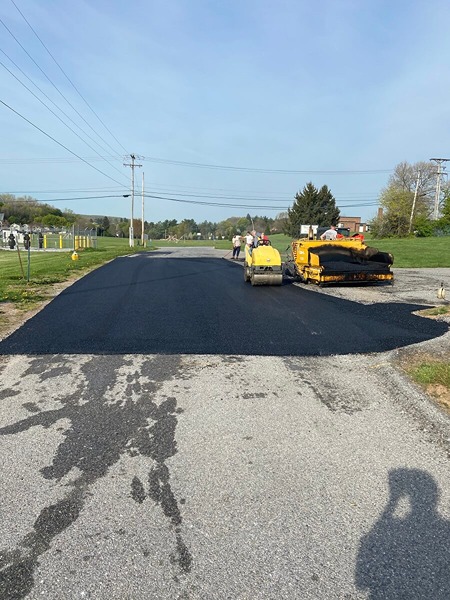
Recommended Thickness by Use
| Use | Asphalt | Stone base |
|---|---|---|
| Standard residential driveway | 2 to 3 inches | 4 to 8 inches |
| Driveway with RV or trucks | 3 to 4 inches | 6 to 8 inches |
| Commercial parking lot | 3 to 4 inches | 8 inches or more |
| Resurfacing overlay | 1.5 to 2 inches | Existing sound base |
Why the Base Matters as Much as the Asphalt
The stone base is what actually carries the weight. Asphalt is only as strong as what it sits on. A thick top layer over a thin or poorly compacted base will still crack and settle, because the foundation cannot support the load. That is why we never skip the groundwork when we pave a driveway, a proper 4 to 8 inches of compacted stone is what turns a good surface into a lasting one.
What Happens If a Driveway Is Too Thin
Too little asphalt or too little base is the most common reason a driveway fails early. A thin driveway flexes under vehicles, which leads to cracking, then water intrusion, then potholes, often within a few years. It is the classic trap of a low bid: the price looks great until the driveway comes apart. Paying for the right thickness up front is far cheaper than replacing a thin one early.
Frequently Asked Questions
How thick should a residential asphalt driveway be?
Two to three inches of compacted asphalt over 4 to 8 inches of stone base. That handles normal passenger vehicles and lasts for decades when built right.
Is 2 inches of asphalt enough for a driveway?
Two inches is acceptable for a standard car driveway on a solid stone base. For heavier vehicles or a weaker base, three inches is safer.
How thick should the stone base be?
Four to eight inches for a residential driveway, more for commercial or heavy use. The base carries the load, so it is not the place to cut corners.
Does thicker asphalt last longer?
Up to a point, yes, especially for heavier use. But thickness only helps if the base underneath is solid. A thick surface on a bad base still fails.
How thick is a resurfacing overlay?
Usually 1.5 to 2 inches of new asphalt laid over an existing sound base. If the base has failed, an overlay is not the right fix.
About R. Stanley’s Paving
This guide was written by the crew at R. Stanley’s Paving, a licensed and insured asphalt contractor (PA Contractor License PA 003586) with over 25 years of hands-on paving, sealcoating, stoning, and repair experience across Leesport, Reading, and Berks County, Pennsylvania. The advice here comes from real driveways and lots we have built and maintained, not theory. Get a free estimate or call (610) 926-2731.
Want a Driveway Built to the Right Spec?
R. Stanley’s Paving builds driveways with the proper asphalt thickness on a solid stone base across Reading and all of Berks County. Free estimates. Over 25 years, PA 003586.
