

Faded, crooked parking lines make a business look neglected, and they create real safety and compliance problems. Here is what parking lot striping involves and when to re-stripe.
Quick answer: parking lot striping is repainting the lines, arrows, and markings that keep a lot organized, safe, and ADA-compliant. Most lots need re-striping every 1 to 2 years, and always after sealcoating, since a fresh sealcoat covers the old lines. Crisp striping improves safety and curb appeal at the same time.
Key Takeaways
- Striping keeps a lot organized, safe, and legally compliant.
- Re-stripe every 1 to 2 years, sooner for high-traffic lots.
- Always re-stripe after sealcoating, the sealcoat covers old lines.
- ADA-required accessible spaces and signage must be correct.
- Crisp lines make a strong first impression on customers.
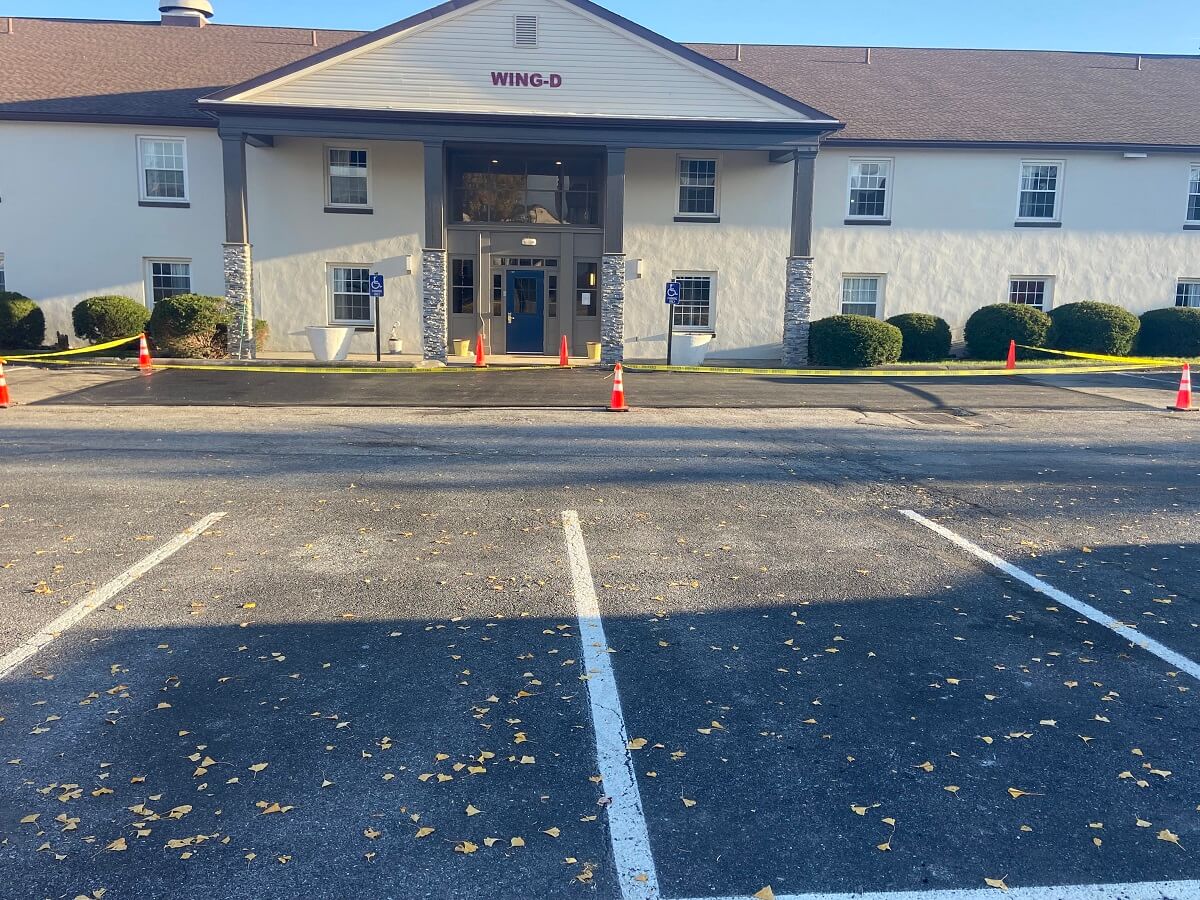
Why Parking Lot Striping Matters
Safety and flow
Clear lines, arrows, and stop bars keep drivers and pedestrians moving safely and prevent confusion and fender-benders.
ADA compliance
Accessible spaces, access aisles, and signage have to meet requirements. Faded or missing markings can be a liability.
Maximized parking
A well-planned layout fits the most spaces safely, which matters when every spot counts for your business.
Curb appeal
A clean, freshly striped lot signals a well-run business before a customer ever reaches the door.
When to Re-Stripe Your Lot
Re-stripe when the lines fade, and always after sealcoating. Most commercial lots need it every 1 to 2 years, sooner for busy retail or apartment lots where traffic wears the paint faster. The clearest trigger is a sealcoat, since a fresh coat covers the old lines, striping is the final step of that job. If your lines are hard to see or your layout has changed, it is time.
What the Striping Process Involves
- Clean the surface so the paint bonds and the lines stay crisp.
- Lay out the plan, spaces, drive lanes, arrows, accessible spots, and any custom markings.
- Apply durable traffic paint in straight, even lines.
- Add ADA markings and signage where required.
- Let it dry before reopening the lot to traffic.
Frequently Asked Questions
How often should a parking lot be re-striped?
Every 1 to 2 years for most lots, and always after sealcoating. High-traffic retail and apartment lots may need it sooner as the paint wears.
Do you have to re-stripe after sealcoating?
Yes. Sealcoating covers the existing lines, so re-striping is the final step. It is usually planned as part of the same job.
What does parking lot striping cost?
It depends on the number of spaces, the layout, and any ADA markings. A free, itemized estimate is the accurate way to price it for your lot.
Are ADA-accessible spaces required?
Yes, commercial lots must provide the right number of accessible spaces with proper markings and signage. Faded or missing ADA striping can be a liability.
How long does striping take to dry?
Traffic paint typically dries within an hour or two, and the lot can reopen the same day. We plan around your business hours where possible.
About R. Stanley’s Paving
This guide was written by the crew at R. Stanley’s Paving, a licensed and insured asphalt contractor (PA Contractor License PA 003586) with over 25 years of hands-on paving, sealcoating, stoning, and repair experience across Leesport, Reading, and Berks County, Pennsylvania. The advice here comes from real driveways and lots we have built and maintained, not theory. Get a free estimate or call (610) 926-2731.
Freshen Up Your Parking Lot
R. Stanley’s Paving sealcoats and stripes commercial and apartment lots across Reading and all of Berks County. Free estimates for business owners. Over 25 years, PA 003586.
